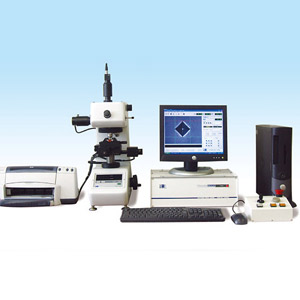


Metallography is that branch of science which deals with the study of properties and structure of metals and alloys by making use of Microscopic Techniques. The main objective of carrying out metallographic tests is to examine the microstructure of any metal or an alloy sample. Some of the interesting features which are studied under microstructure are phase transformation, volume fractions, grain size, phases, grain boundaries, morphology, effective case depth, banding, non-metallic inclusions in steel, porosity, cross contamination and several others. The microstructures signify the mechanical properties such as corrosion resistance, toughness, strength, mechanical workability and ductility and influence their applications. The specimen preparation for carrying out metallographic testing is a very crucial step and KANHA TESTING LABS has set a well devoted workshop for this purpose. The steps that needs to be followed for sample preparation are documentation, sectioning, cutting, mounting, planar grinding, rough polishing, final polishing, etching, microscopic analysis and hardness testing
Because a complete knowledge of microstructure of metals and alloys is required to understand and control their behavior thus, KANHA TESTING LABS offers metallographic testing facilities which aids to quality assurance, failure analysis and also research and development.